ServicesGenerator Installation
Standby Generator Installation in Kennedale
We size, place and wire home standby generators so your fridge, lights and air conditioning keep running when the grid goes quiet. One person handles your job from the first walkthrough to the startup test, so you always know who to ask and what comes next.
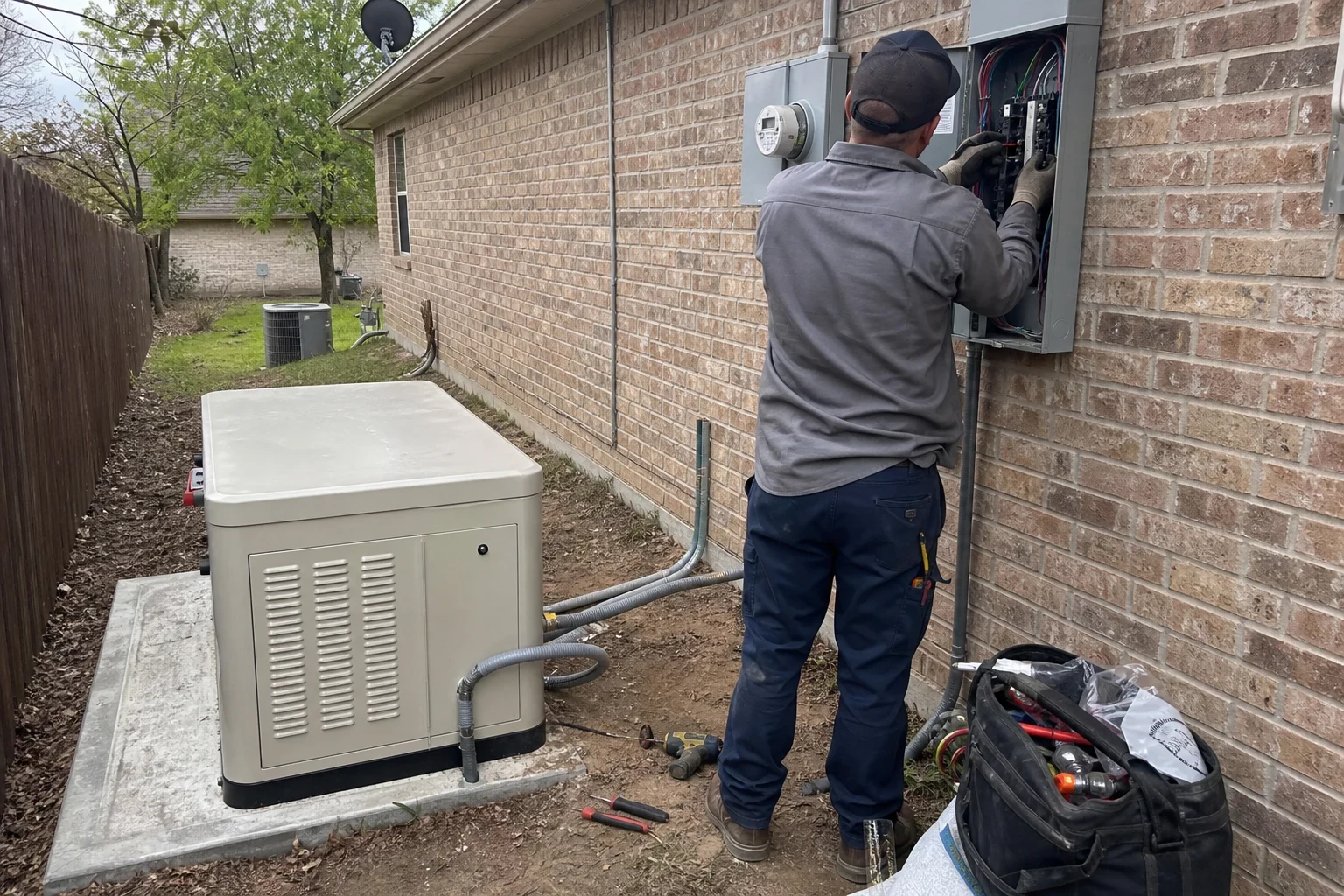
Backup power that switches on by itself
A standby generator sits on a pad outside your home and connects to your electrical system through an automatic transfer switch. When utility power drops, the switch senses it, starts the generator and moves your circuits over within seconds. When power returns, it switches back and lets the engine cool down and shut off.
Done well, it is quiet work you rarely think about. Done poorly, it can backfeed the utility lines, overload a breaker or trip every time the AC compressor kicks on. Most of the care goes into sizing the unit to your real loads, placing it where it can breathe and be serviced, and wiring the transfer switch cleanly into your panel.
North Texas sees both summer thunderstorms and the occasional hard freeze, so we plan for a unit that can carry heat or cooling, not just a few lights. The same person who walks your property with you is the one you talk to on install day and at the final inspection.
What your installation includes
- Load calculation and sizing
- We list what you want running during an outage and measure what your home actually draws. That tells us whether a whole-home unit makes sense or whether an essential-circuits setup covers what matters at lower cost.
- Automatic transfer switch
- The transfer switch is mounted next to your main panel or built into it. Its job is to let your home take power from only one source at a time, so generator current never travels back out onto the street lines where a utility crew may be working. We label every circuit it controls.
- Where the unit goes
- The generator rests on a firm, level base, set back from windows, doors and vents by the distances the manufacturer and code require. We weigh how engine noise carries toward bedrooms or a neighbor's yard, and leave open space around it so a technician can work on it later.
- Fuel connection coordination
- The natural gas or propane line is a plumber's work. We coordinate their visit with ours and confirm the supply can feed the generator at full load before startup.
- Permit and inspection
- We pull the permit and handle inspections as required by the local jurisdiction, and we are there when the inspector arrives.
- Startup and walkthrough
- We run a simulated outage with you watching, show you the controller and exercise schedule, and leave the work area clean.
Signs a standby generator is worth a look
Outages that run for hours
If storms regularly leave you without power past the point a fridge stays cold, a generator turns that into a short flicker.
Medical devices at home
A CPAP, an oxygen machine or insulin that has to stay cold cannot simply wait out a long outage. A standby unit takes over without anyone stepping outside to start it.
You are running cords from a portable
Extension cords through a cracked door, or a portable generator plugged into a dryer outlet, are a fire and backfeed risk. A proper transfer switch removes both problems.
Heat or cold makes outages unsafe
A long outage in July or during a freeze is more than an inconvenience for small children and older relatives. Keeping the HVAC on is often the main reason people call us.
You work from home
Internet equipment, a home office and a charged phone keep your workday going when the neighborhood goes dark.
What shapes the price
No two generator installations cost quite the same, because the price follows your loads and your property more than the box itself. We price each part on the estimate so you can see where the money goes. If you want to trim, we will show you which choice moves the number most.
Generator capacity
A unit that runs your whole home, including central air, costs more than one sized for a fridge, a furnace fan and a few circuits.
Transfer switch type
Whole-home switches and essential-circuit subpanels differ in parts and labor. Load management modules that stagger big appliances can let a smaller generator do more.
Length of the runs
Every extra foot between the generator, your electrical panel and the gas supply adds conduit and wire, and sometimes a trench across the yard.
Panel condition
An older or full panel may need replacing before a transfer switch can be added. That work is covered on our Panel Upgrades page.
Permit and fuel work
Permit fees and the plumber's gas line work are part of the total, and we list them so nothing appears later.
How the job runs, start to finish
- 1
Site visit and conversation
We look at your panel, the meter, the gas meter location and where a unit could sit. You tell us what you want powered, and we tell you plainly what that takes.
- 2
Written plan and estimate
You get a line-item estimate covering the generator size, transfer switch, wiring run, pad and permit. If your panel needs work first, we say so and explain why.
- 3
Permit and scheduling
We file the permit, set the install date and line up the plumber for the fuel connection. You hear from one person about every date.
- 4
Installation day
We protect floors and walkways, set the pad and unit, mount the transfer switch and run conduit and wire. Power to your home is off only for the stretch needed to connect at the panel, and we tell you in advance when that will be.
- 5
Inspection and startup
After the inspection passes, we fire the unit, simulate an outage and walk you through the controls before we pack up.
Generator installation questions
Why not just use a portable generator?
A portable can work for a few appliances if it is connected through a properly installed inlet and interlock. It still has to be fueled, rolled out and started in bad weather. A standby unit starts on its own, runs on your gas supply and can carry heating or cooling, which most portables cannot.
How long does installation take?
Most installs take one to two days on site once the permit is issued and the pad is ready. The overall timeline also depends on equipment availability and inspection scheduling, which we keep you updated on.
Will my current panel work with a generator?
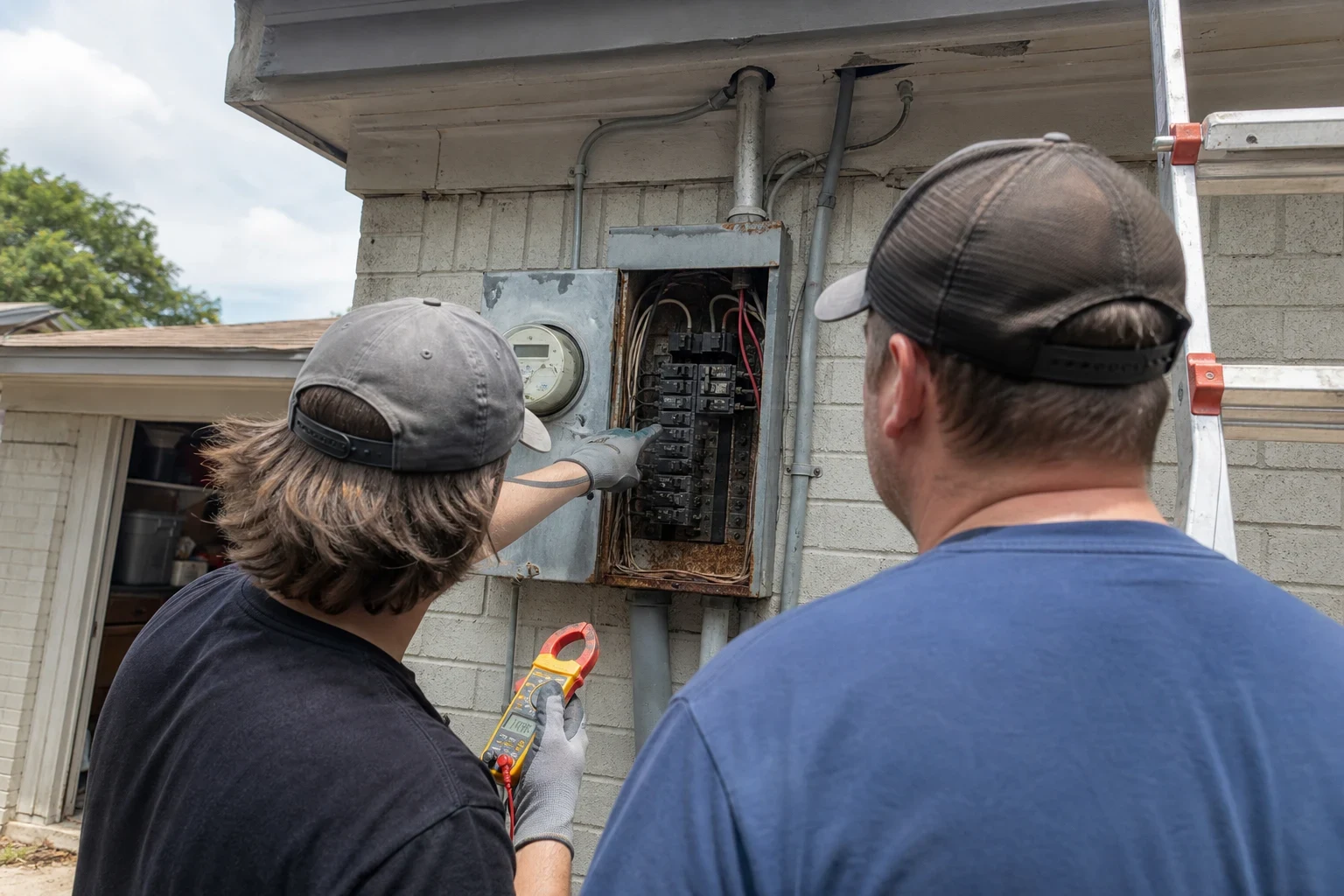
Often it will, but we check during the site visit. Panels that are full, damaged or out of date may need an upgrade before a transfer switch can be added safely, and we will show you what we found.
Can I choose which circuits stay on?
Yes. With an essential-circuits setup we pick the circuits together, such as the fridge, furnace, a few lights and the home office, and wire only those to the generator.
Should I consider a battery instead?
Batteries are silent and need no fuel, while generators run as long as gas flows. Some homes use both. Our Home Battery Backup Systems page covers that option, and we can compare the two at your visit.
Who maintains the generator afterward?
Standby units need periodic oil changes, filter checks and battery testing. We handle that through our Generator Service & Repair work, so the same company that installed it keeps it ready.
Plan your backup power before the next storm
We will walk your property, look at your panel and talk through what you want running. You leave the visit with a clear plan and one person to call with questions.