ServicesSurge Protection
Surge Protection for Your Kennedale Home
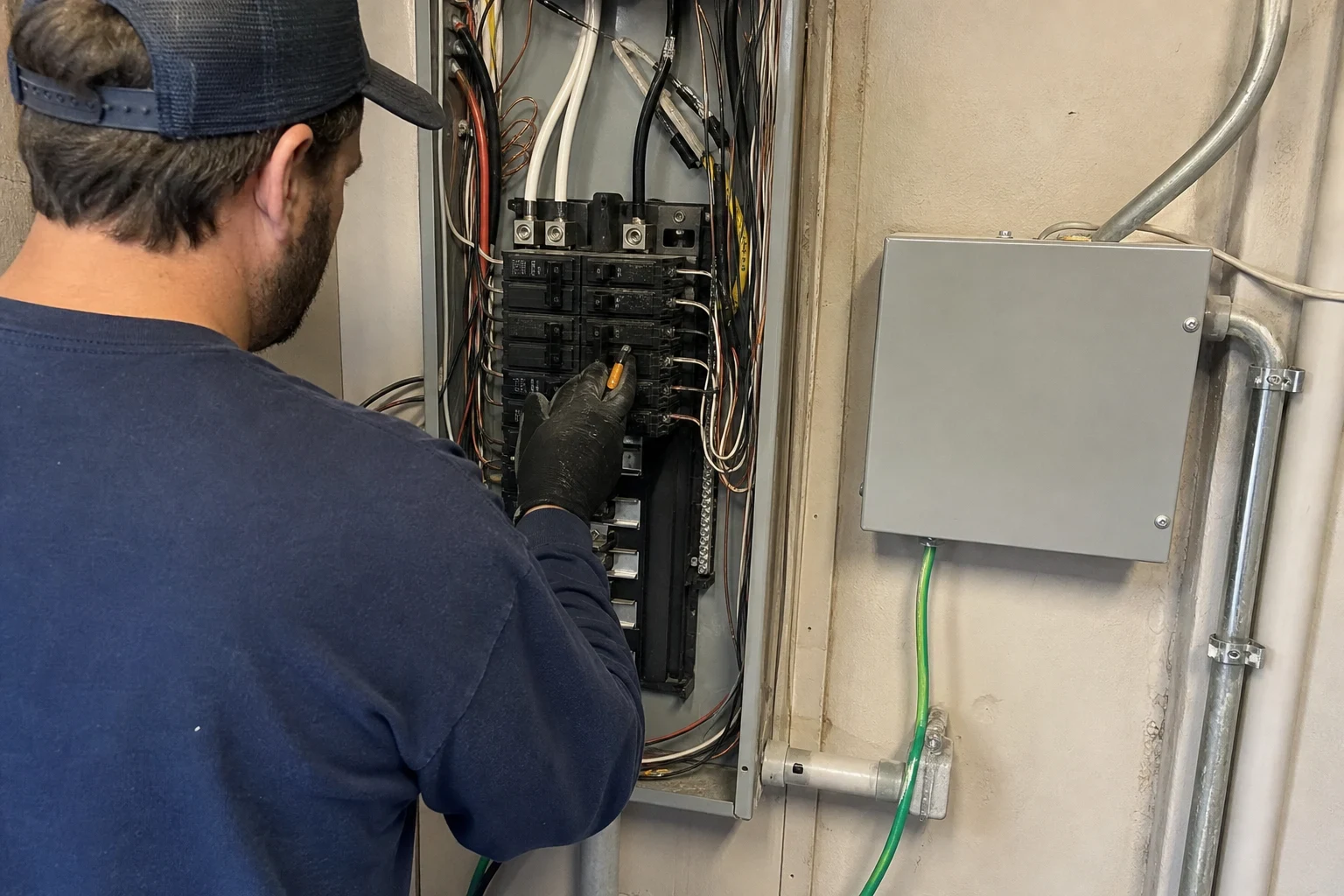
We install a surge protective device at your electrical panel, check the grounding it depends on, and show you where point-of-use protection still makes sense. One person explains the options, schedules the work and walks you through the finished install.
What whole-home surge protection does
A surge is a brief spike in voltage. Some arrive from outside, from lightning near the lines or switching on the utility grid. Most start inside your home, every time a compressor, motor or large appliance cycles on and off. Each spike is short, but the electronics in modern appliances, thermostats, chargers and televisions wear down a little with every one.
A panel-mounted surge protective device sits on its own breaker and diverts that excess voltage to ground before it travels down your circuits. It works with the plug-in strips you already own, not instead of them. Spring storms across North Texas make this worth doing before the season rather than after a loss.
The person you speak with on the first call is the same person who sets the visit, answers questions during the work and confirms everything is tested before we leave.
What the work includes
- Panel-mounted protective device
- We fit a device sized for your service and your panel, landed on a dedicated breaker. We keep the leads short and direct, because long, looped wiring slows the device and weakens its protection.
- Grounding path check
- Your surge device is only as good as its path to earth. We look over the clamp at the ground rod, follow that conductor back to the panel and confirm your water and gas piping are properly tied into the grounding system. If something needs fixing, you hear about it in plain terms.
- Low-voltage line review
- Cable, satellite and phone lines can carry a surge into your home too. We look at where they enter and whether they share a common ground with the electrical service.
- Point-of-use recommendations
- Computers, home theater gear and network equipment benefit from a second layer at the outlet. We point out which rooms need it, so you buy only what is useful.
- Testing and a clear walkthrough
- After installation we verify the device indicators, check the breaker and show you what a healthy status light looks like. You will know what to watch for without needing to open the panel.
Signs your home could use surge protection
Electronics wearing out early
When a garage door opener, smart thermostat or appliance control board dies well ahead of its expected life, a steady run of minor surges is a common cause.
A dim as the AC kicks on
A brief dip or flicker as the air conditioner or another large motor starts shows how much your circuits move under load. It is worth a look on its own and a good reason to add protection.
A recent strike nearby
If lightning hit close to your home and something stopped working afterward, other equipment may have taken damage you cannot see yet.
New expensive equipment
A new EV charger, a high-efficiency HVAC system, a home battery or a modern range all rely on sensitive electronics that are costly to replace.
No protection at the panel today
Many panels have never had a surge device. If you are not sure whether yours does, we can tell you during the visit.
What moves the cost of surge protection
The price depends far more on your panel and grounding than on the device itself. We explain each item in your written estimate so you can see where the money goes. Nothing is added after you approve the scope without talking to you first.
Panel condition and space
A panel with an open slot for a two-pole breaker is straightforward. A full or outdated panel may need rearranging, or a conversation about a panel upgrade.
Grounding corrections
A missing or corroded ground rod connection, or piping that is not tied into the grounding system, has to be fixed for the device to do its job. That work is added to the scope.
Device rating and type
Devices differ in surge current rating and in features such as replaceable modules or status indicators. We suggest a rating that fits your service size.
Additional protection points
A subpanel, a detached garage or shop, or outdoor HVAC equipment may each call for its own device.
How a surge protection visit runs
- 1
Start with a phone call
Give us a sense of your setup: roughly how old the panel is, anything that quit working after a storm, and which electronics matter most to you. From there we set a service visit on a day that works for your schedule.
- 2
Assessment at your panel
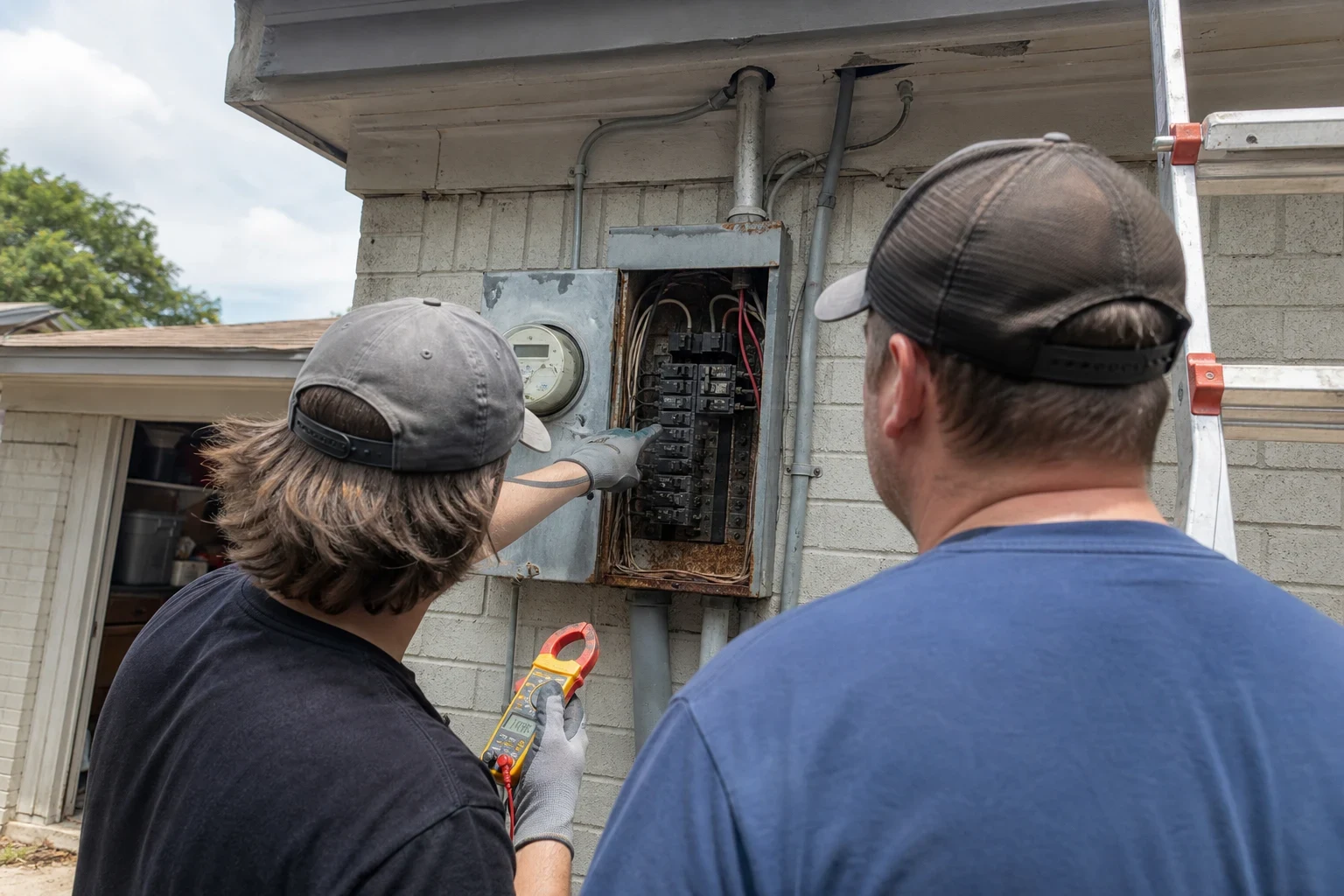
We open the panel, confirm there is room for a dedicated breaker and check the grounding. You get a plain explanation of what we found and a written scope before work starts.
- 3
Installation with care
Power to the house is shut off only for the time needed to make the connections, and we tell you before it goes down. We protect the floor and wall around the panel and keep the work area tidy.
- 4
Testing and handoff
We restore power, confirm the device reads healthy and check that nothing else was disturbed. If a permit and inspection are required by the local jurisdiction, we arrange them and keep you updated.
Surge protection questions
Will a panel device stop damage if lightning hits my house?
Not from a direct strike on the house. That much energy overwhelms any protector made for residential use. The device is built for the smaller and far more common spikes: lightning landing some distance away, switching out on the utility lines, and motors and compressors cycling inside your home.
Do I still need surge strips if I have a panel device?
For computers, televisions and networking gear, yes. The panel device takes the large spikes, and a quality strip at the outlet catches what remains. The two layers together give sensitive equipment the best chance.
How long does installation take?
When the panel has space and the grounding is sound, the install usually fits within a single visit. Grounding corrections or extra protection points add time, and we tell you that during the assessment.
How do I know the device is still working?
Most devices have status lights on the front. If the light changes or goes out, the protective components have been used up and the device or its module needs replacing. It is worth checking after a heavy storm.
Can you add surge protection during other electrical work?
Yes, and it is often the simplest time. If we are already at your panel for a panel upgrade, an EV charger installation or remodel and addition wiring, adding a device is a small extension of the same job.
Protect the equipment you rely on
Tell us about your panel and what you want protected. One person will book the visit and stay with your job through testing and cleanup.