ServicesPanel Upgrades
Panel Upgrades in Kennedale
We replace worn or undersized breaker panels and raise service capacity when your home needs more room to grow. The person who measures your load is the one you talk to through the permit, the work day and the final walkthrough.
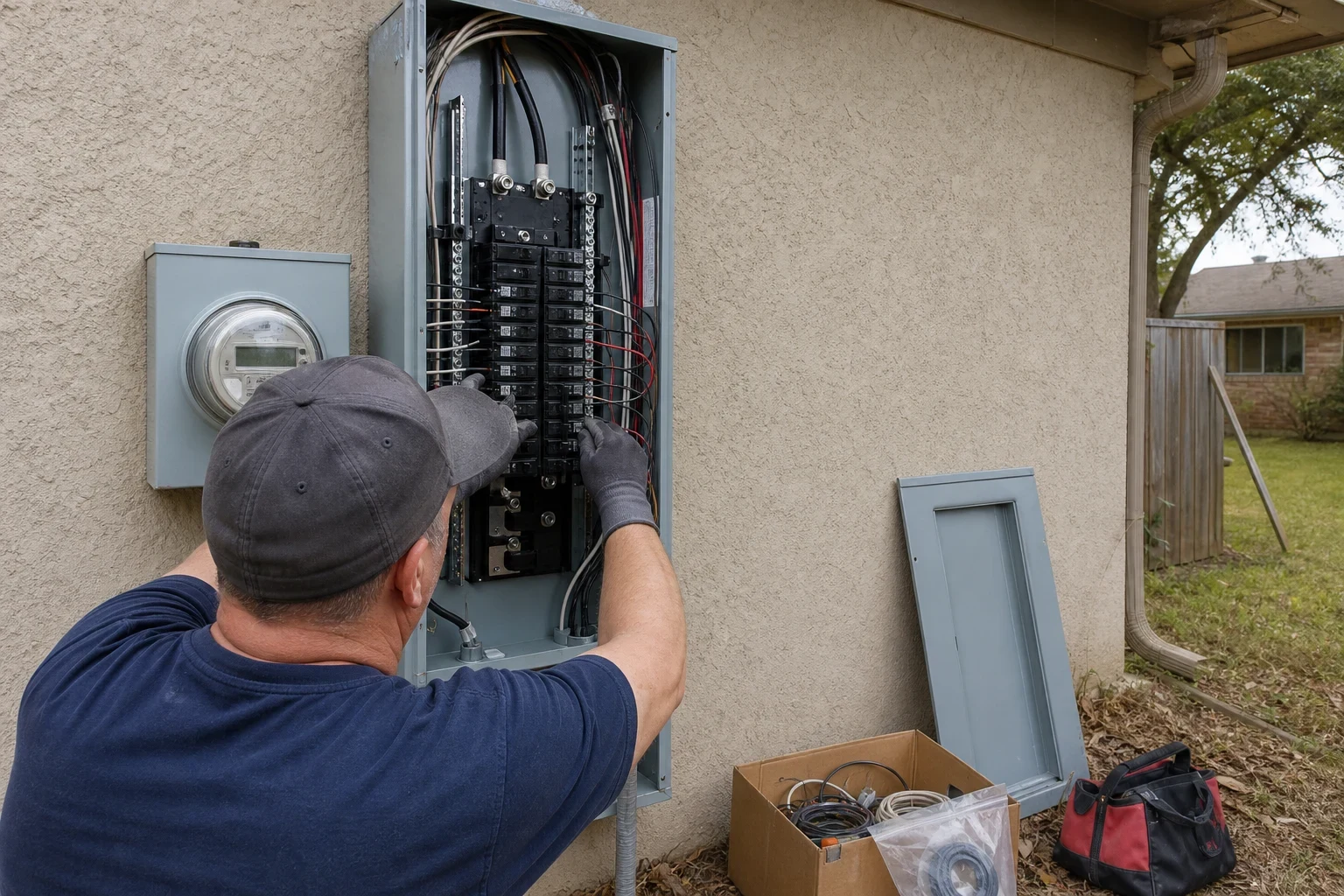
Knowing when to replace a breaker panel
Every circuit in your home begins at the breaker panel. Once it has no spare slots, shows signs of heat or age, or can't support the equipment you plan to add, we swap it for a new enclosure and breakers. When the numbers call for it, we also increase the service coming from the meter.
Not every tripping breaker means you need a new panel. We start with a load calculation and a close look at the bus bars, breakers and wiring connections. If a repair or a single new circuit solves the problem, we tell you that and point you to our electrical repair work instead.
One of us handles your job from the first phone call to cleanup. You won't be passed between an estimator, a scheduler and a crew who has never seen your notes.
Inside the scope of a new panel
- Measuring your real demand
- Before anything is ordered, we total the loads your home already carries, from the air conditioner and range to the water heater, then factor in what's coming, like an EV charger or a heat pump. That figure tells us whether a like-for-like swap will do or a bigger service is worth it.
- Enclosure and matched breakers
- The new panel goes in with breakers listed for that specific brand, never mixed parts. Where today's code asks for AFCI or GFCI protection, those breakers are part of the install.
- Meter base and service conductors
- Raising the amperage often means the meter base and the conductors feeding the panel have to change too. We check both, and they appear on your estimate only when they actually need replacing.
- Grounding and bonding
- Ground rods, the bond to the water pipe and the separation of neutrals from grounds all get checked. Anything that falls short is corrected before we close the cover.
- A directory you can rely on
- We trace each circuit to the rooms and outlets it feeds, then give every breaker a typed label. Next time a breaker trips, you'll know exactly which one.
Signs your panel needs attention
Breakers that trip or feel warm
A breaker that trips often, or a cover that feels warm to the touch, can point to an overloaded circuit or a worn connection at the bus bar.
Lights dim when the AC starts
A brief dip when the compressor kicks on is common. A deep flicker or a long dip on a hot afternoon suggests your service is working near its limit.
No open spaces left
Rows of tandem breakers, or no room at all, make it hard to add a circuit safely.
An older or recalled panel brand
Some panels, such as certain Federal Pacific and Zinsco models, have a known history of breakers that fail to trip. Some insurers ask about them as well.
Buzzing, scorch marks or corrosion
Any of these deserves a look soon. Turn off the affected circuit if you can and avoid loading it until it has been checked.
New equipment on the way
An EV charger, a generator interlock or a home battery often needs capacity your current panel doesn't have.
How your panel upgrade runs
- 1
A conversation by phone
You tell us what is happening and what you plan to add. We book a service visit at a time that suits you.
- 2
Site visit and written estimate
We open the panel, run the load calculation and photograph what we find. You get a written estimate with each line explained, and you decide with no pressure.
- 3
Permits and the utility
We file for the permit with whichever jurisdiction covers your address and book the inspection. If the service size changes, we also schedule the utility's disconnect and reconnect. Every date comes to you from the same person.
- 4
The work day
Power is off for most of the day, so we plan around refrigerators, medical devices and work-from-home needs with you ahead of time. We lay drop cloths, protect the wall around the panel and leave the area swept.
- 5
Inspection and walkthrough
We meet the inspector, then walk you through the new panel, the directory and any breakers worth knowing about.
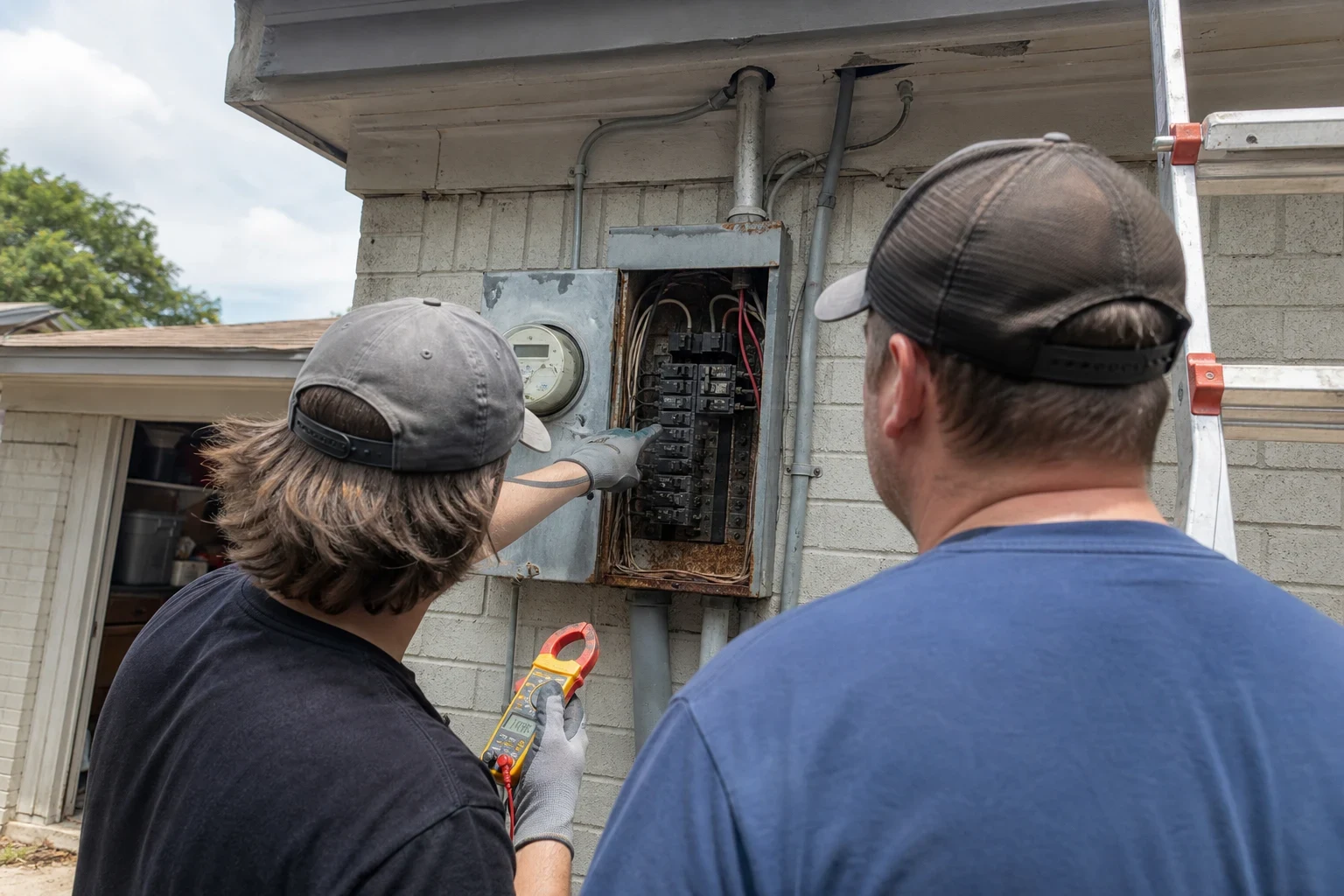
What shapes the cost of a panel upgrade
Every estimate is written for your home after we have seen the panel and the service. The biggest question is whether you need more capacity or simply a sound replacement. The rest comes down to what we find behind the cover and outside at the meter.
- Same size or more amperage
- Replacing a panel at its current rating is a smaller job than moving from 100 to 200 amps, which usually involves new service conductors and work with the utility.
- Location and access
- A panel in an open garage wall is straightforward. Relocating one, or working in a finished wall or tight closet, adds labor and wall repair.
- Condition of the meter base and wiring
- Corroded meter bases, aluminum branch wiring or undersized feeders add work that has to be done before the new panel goes in.
- Breaker types required
- Circuits that now need AFCI or GFCI protection use breakers that cost more than standard ones.
- Grounding corrections
- Missing ground rods or a broken water pipe bond are added to the scope and listed on their own line.
Before you schedule a new panel
Something not covered here? (682) 357-4925
How long will my power be off for a panel replacement?
For a typical swap at the same amperage, plan on one working day, with your home without power for most of it. If the meter base changes or the utility has to disconnect and reconnect the service, the job can run longer. The inspection sometimes falls on a later date. Your written estimate lays out the schedule we expect.
Do you handle the permit?
Yes. We apply for the permit your jurisdiction asks for and set up the inspection. There is nothing for you to file yourself.
Do I need 200 amps to add an EV charger?
Not always. Many homes can add a charger on their current service once the load calculation is done. If the numbers are tight, we explain your options, from a larger service to load management, and our EV charger installation work can be planned together with the panel.
Can you move my panel to a different wall?
Often, yes. Relocation involves extending circuits and sometimes moving the service entrance, so we look at the walls and the meter location before giving you a plan.
Should I add surge protection at the same time?
It is a good moment to do it, since the panel is already open. A whole-home surge protector mounts at the panel, and we can include it in the same estimate. Our surge protection page covers how it works.
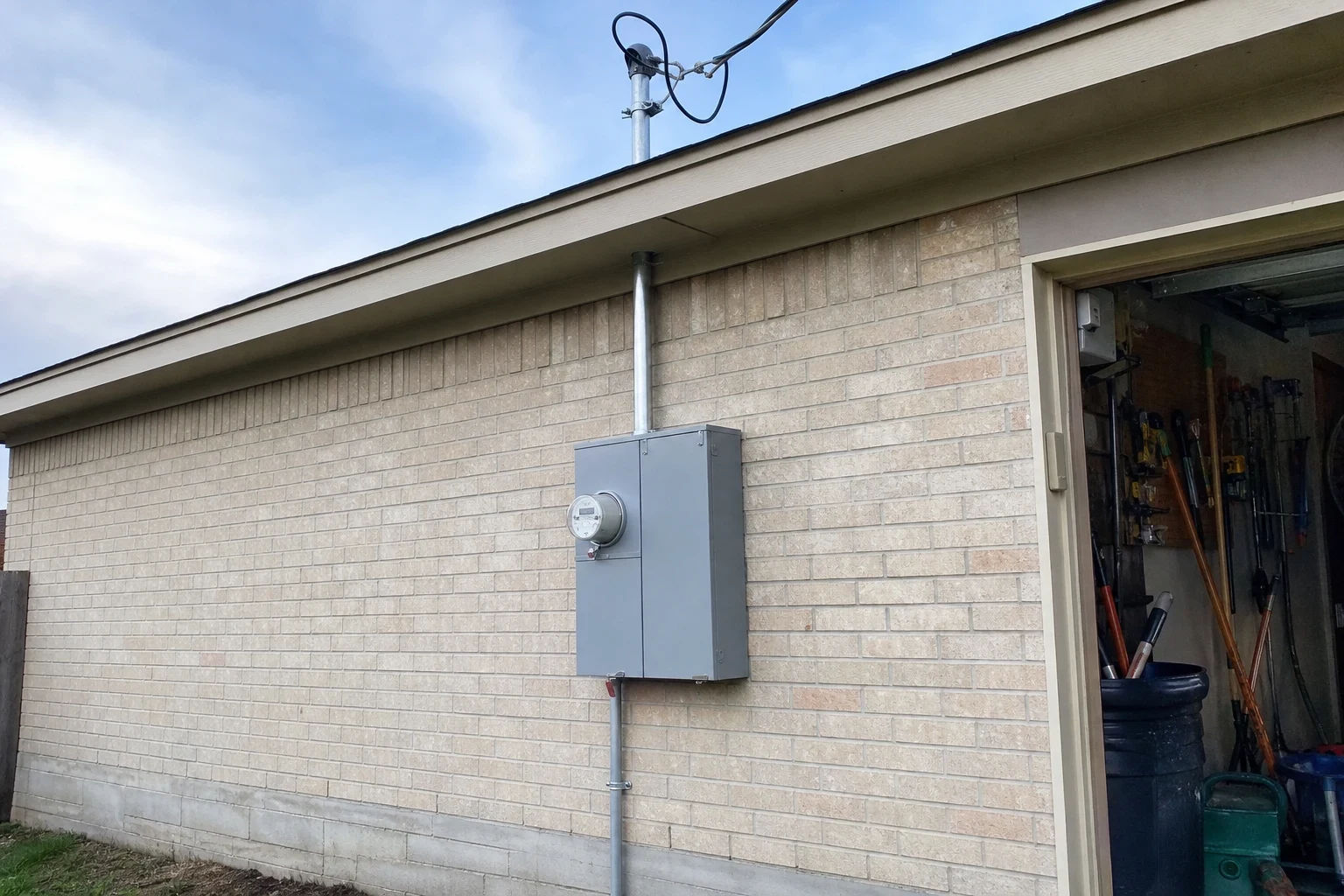
Talk through your panel with one person
Tell us what your panel is doing and what you want to add. We'll set a time to look, measure your load and explain what makes sense for your home.