ServicesGenerator Service & Repair
Generator Service & Repair in Kennedale
When the grid goes down, a standby generator has one job, which is to start and carry your home. We maintain the engine, battery and transfer switch, track down the cause when something fails, and one person keeps you posted from the first call through the final load test.
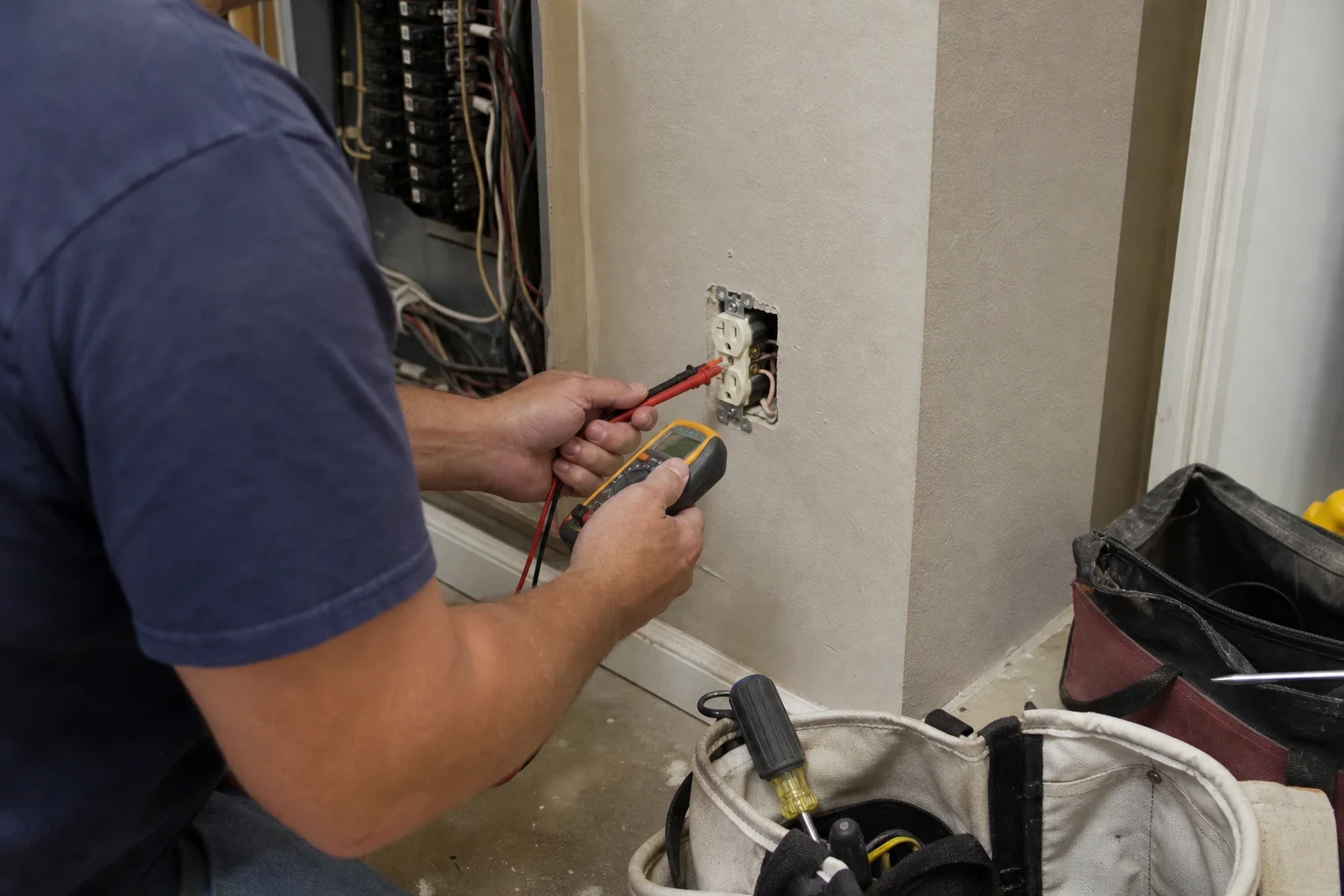
Keeping a backup generator ready to run
Most generators that fail during an outage were not broken the day before. A battery lost its charge, a fuel valve was left closed, or the transfer switch never saw a real load test. Regular service catches those small things while the lights are still on.
We work on the electrical side and the routine mechanical upkeep of home standby generators, along with the transfer switches and inlet setups that connect portable units to your home. Long summer storm seasons and the occasional hard freeze in north Texas both ask a lot of a unit that sits idle most of the year.
When you book with us, the person who answers your questions is the same one who schedules the visit, reports what was found and follows up on any parts. You never have to explain your generator twice.
What a service visit covers
- Battery and charger check
- We load test the starting battery, clean the terminals and confirm the trickle charger holds it at the right voltage. A battery that has quietly lost strength is behind more failed starts than any other part.
- Oil, filters and plugs
- We change the oil and oil filter, inspect or replace the air filter and check the spark plugs for wear and fouling. Used parts are shown to you before they go in the trash.
- Transfer switch testing
- We cut incoming power on purpose and confirm the switch senses the loss, signals the generator to start and moves your circuits over, then returns them once grid power is restored. Contacts, connections and timing are checked so the changeover is clean in both directions.
- Load test under real demand
- Starting is not the same as carrying a load. We run the unit with household circuits on it to confirm it holds steady voltage and frequency without stalling.
- Controller and enclosure inspection
- We read the controller's fault history, confirm the weekly exercise schedule and check the enclosure for nesting rodents, chewed wiring, debris and loose panels.
- Written findings
- You get a plain summary of what we tested, what we replaced and anything that needs attention later, so the next service starts from a clear record.
When a generator is asking for a visit
Its routine self-test has gone quiet
Standby units are usually set to start on their own for a short run, often once a week. If you have stopped hearing that run, something is holding it back, and you want to learn that on a calm day rather than in the dark.
A lit lamp on the controller
When the controller shows a colored warning lamp, the unit has recorded a problem. Some of those clear with a simple fix, while others point to a part that is wearing out.
Slow or rough starts
Cranking that drags, sputtering or a unit that shuts down after a few seconds often traces back to the battery, fuel supply or spark plugs.
Lights flicker on generator power
Unstable voltage can stress electronics and appliances. It usually signals a governor, load or connection issue worth testing.
No service in over a year
Oil breaks down and batteries age even when a unit barely runs. A year without maintenance is reason enough to book a visit.
How the visit goes
- 1
A conversation first
You tell us the make, the age and what you have noticed. We ask about fuel type and where the unit sits so we arrive with the right filters and parts.
- 2
Inspect before we touch
On site we read the controller history and look the unit over with the power still on. That way we see the problem as it is before anything changes.
- 3
Upkeep first, then any fix
Routine maintenance comes first. Before a repair begins, we explain what failed and what fixing it involves, and you decide. If a part has to be ordered, you hear the expected timing and price from the same person you spoke with first.
- 4
Test, tidy and report
We run a simulated outage and a load test, clean up around the enclosure and leave you with written notes on what was done.
What shapes the cost
Routine maintenance is fairly predictable. Repairs depend on what we find. We explain the cost of any repair before the work starts, and you decide whether to go ahead.
- Size and type of unit
- Larger air-cooled and liquid-cooled standby generators take more oil, filters and time than a small unit or a portable with an inlet.
- Parts needed
- A battery, spark plugs or a filter are simple. Control boards, voltage regulators and transfer switch components cost more and may need to be ordered.
- How long it has gone unserviced
- Skipped upkeep tends to stack one problem on top of another. That is especially true once moisture or rodents have worked their way into the wiring and connections.
- Access to the unit
- Generators tucked tight against fences, equipment or landscaping can take longer to open up and work around safely.
Questions owners ask about generator upkeep
Something not covered here? (682) 357-4925
How often does a standby generator need maintenance?
For most homes, one visit a year is about right. If the unit carried your home through long outages, plan on sooner. Oil and batteries wear out with time even on an engine that rarely runs, so many owners schedule ahead of storm season.
Do you work on generators you didn't install?
Yes. We service common residential standby generators and transfer switches no matter who put them in. If a repair calls for a manufacturer-specific part, we tell you where it comes from and how long it should take to arrive.
Will my power be off during the visit?
Only briefly. Testing the transfer switch means letting the generator take over for a short time, and we let you know before that happens so nothing important is interrupted.
My generator starts but won't take over the house. What's wrong?
In most cases the engine is fine and the trouble sits in the transfer switch, the wiring that signals it or a setting on the controller. We check each of those in order and show you which one failed before recommending a repair.
Can you help with a portable generator connection?
We check and repair inlet boxes, interlock kits and the wiring that safely connects a portable generator to your panel. If you are thinking about a permanent unit instead, our generator installation page explains how that works.
Who do I talk to if a part has to be ordered?
The same person who booked your visit. They track the part, schedule the return trip and update you along the way, so you are not passing messages between different people.
Get your generator ready before the next outage
Tell us about your unit and what you have noticed. We will book a service visit and keep you updated from the first inspection to the final load test.