ServicesWhole-Home Rewiring
Whole-Home Rewiring in Kennedale
We replace tired, ungrounded or brittle wiring with new copper circuits sized for the way you live now. The work is planned room by room, permitted and inspected as required, and the person who walks your home with you stays your contact until the last cover plate is on.
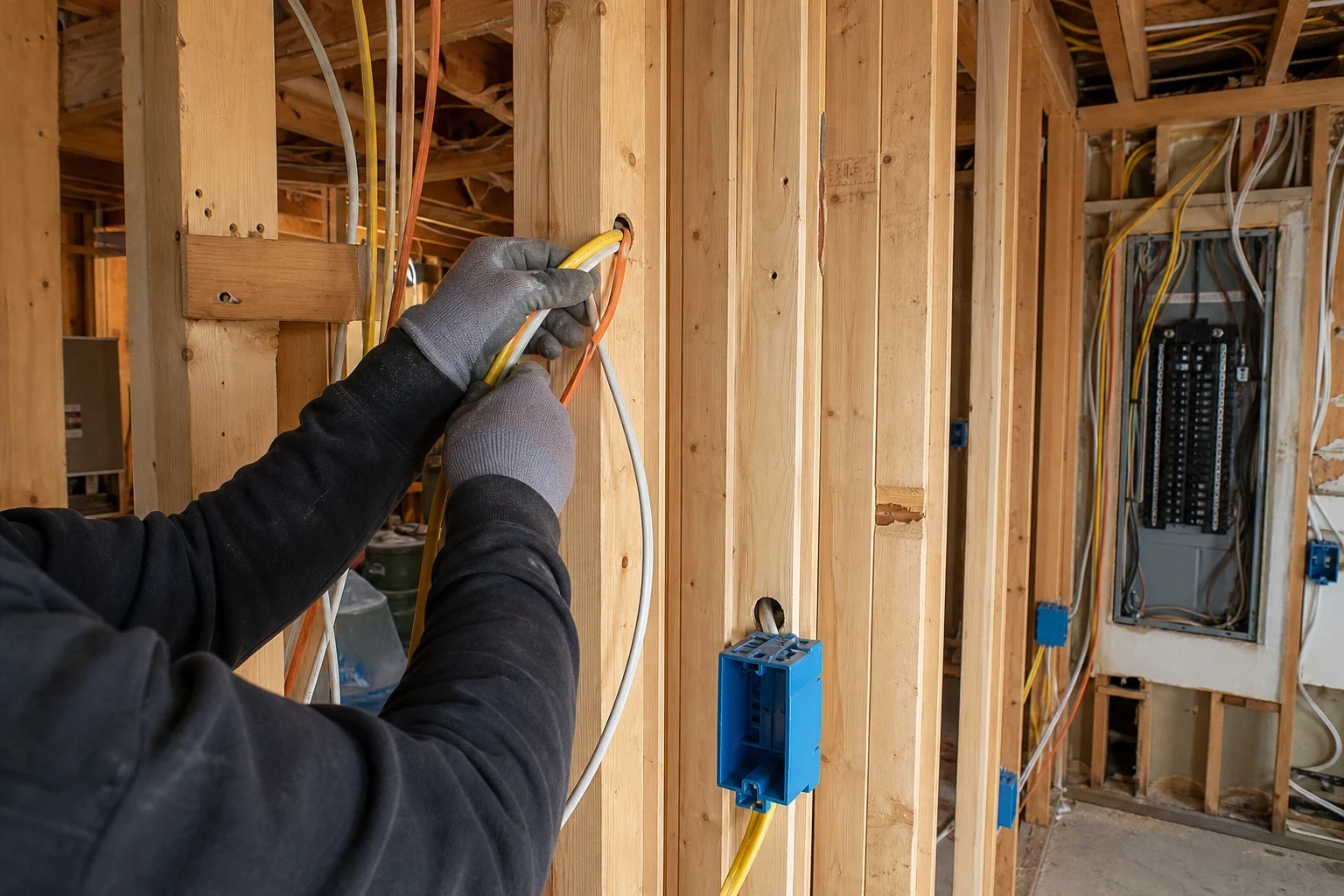
When Rewiring Is the Right Call
Most wiring problems can be repaired one circuit at a time, and when that is the honest answer we will tell you so and point you to our electrical repair service. Rewiring makes sense when the trouble is the wire itself: insulation that has gone brittle, branch circuits that were never grounded, or a patchwork of past additions that no longer adds up.
Attics in North Texas run very hot through the summer, and years of that heat can dry out older insulation on cable running through the attic. Replacing it with modern grounded cable gives you safe receptacles, room for today's appliances and a system you can understand.
One person handles your questions, the schedule, the permit and the inspections from estimate to cleanup. You never have to repeat your story to someone new.
What a Rewire Includes
- A circuit-by-circuit survey
- Before we price anything, we trace what you have, note how each room is fed and photograph what we find in the attic and at the panel. You see the same pictures we base the plan on.
- New grounded copper circuits
- We run new cable from the panel to each room, sized for its load. Kitchens, laundry and bathrooms get the dedicated circuits current code expects.
- New devices and protection
- Outlets, switches and boxes are replaced as the circuits go in, with GFCI and AFCI protection where the code calls for it. Old two-prong receptacles become properly grounded three-prong outlets.
- Panel review
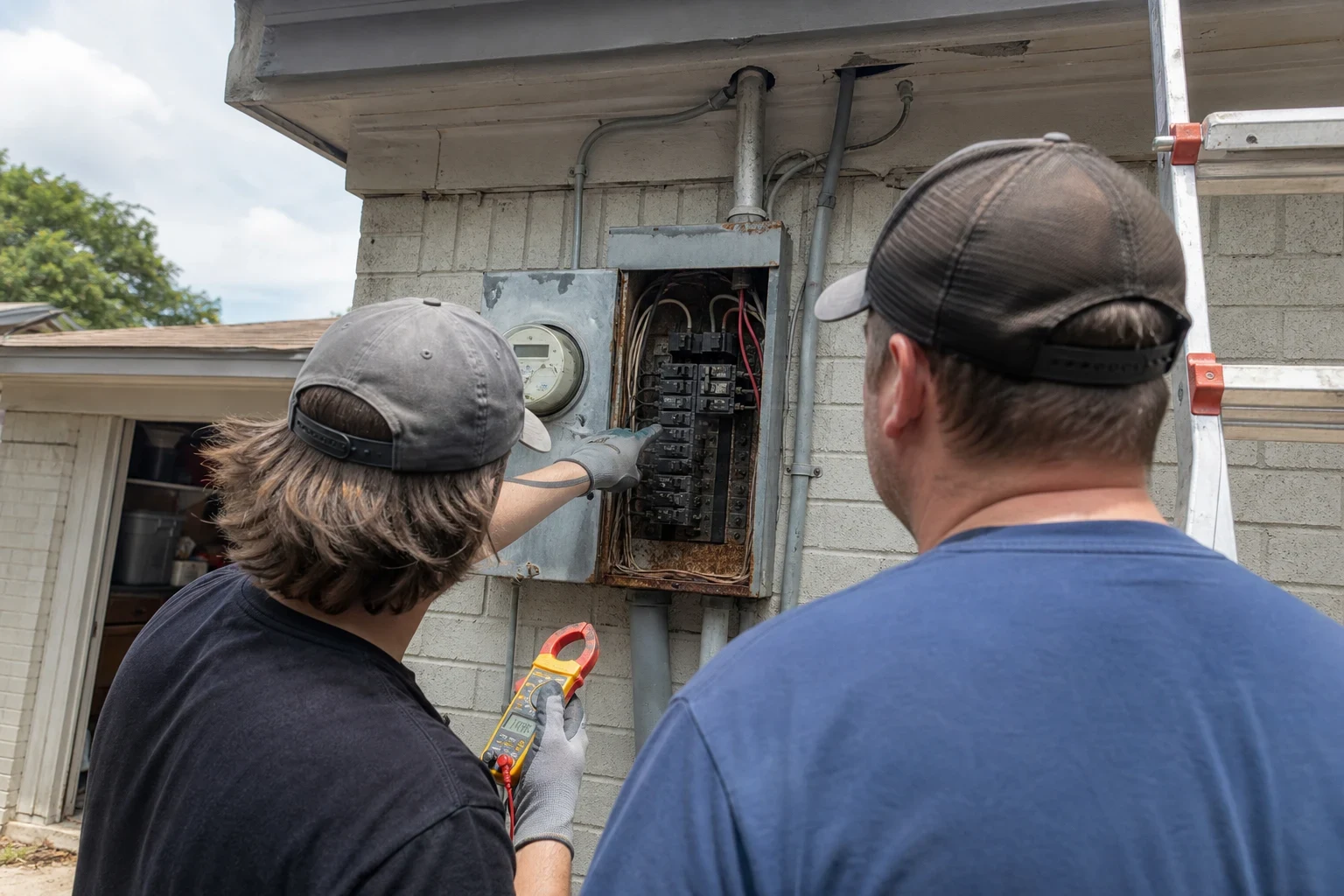
- A rewire often shows that the existing panel is short on space or capacity. If so, we explain why and plan it together with a panel upgrade rather than as a surprise later.
- Permits and inspections
- We file the permit with the local jurisdiction and book each inspection it requires, once the new wire is in the walls and again when the job is finished. We stay on site to walk the inspector through the work.
- Careful access and cleanup
- Openings are kept small and cut cleanly where they can be patched easily. Floors and furniture are covered while we work, and each room is swept before we leave it.
Signs Your Home Needs New Wiring
Two-prong outlets throughout
Ungrounded receptacles leave computers, appliances and people without a safe path for a fault. Adapters only hide the problem.
Cracked or crumbling insulation
If wire at a switch or in the attic flakes when touched, the protection around the conductor is failing.
Aluminum branch wiring
Some homes from the late 1960s and 1970s were wired with aluminum branch circuits. Loose, warm connections at outlets are the usual warning.
Warm plates, flicker and scorch marks
Cover plates that feel warm, lights that dim when the AC starts, or brown marks around a receptacle point to connections and wire that need attention soon.
Breakers that trip with ordinary use
When everyday loads keep tripping circuits across the house, the wiring was likely laid out for a much smaller demand.
What Moves the Cost of a Rewire
Every rewire is priced from the walkthrough, not from square footage alone. The written estimate breaks the job into separate lines, so the cost of each piece is visible before you agree to anything. These are the things that move it most.
Floor plan and dedicated runs
A larger home needs longer cable runs and more boxes to set. Each appliance that calls for its own line back to the panel, such as a range, dryer or window unit, adds a separate run and the time to pull it.
Attic access and wall finishes
An open attic makes runs straightforward. Low clearance, plaster, paneling or finished ceilings take more time to work through carefully.
Panel condition
If the panel lacks space or capacity for the new circuits, replacing it becomes part of the scope.
Code-required protection
AFCI and GFCI devices required under current code add material cost but bring real safety gains.
Permit and phasing
Permit fees vary by jurisdiction, and working in stages to keep you living comfortably at home can add some time to the schedule.
How a Rewire Runs
- 1
Walkthrough and written plan
We tour your home with you, trace the circuits and talk about how you use each room. You get a written, line-item scope showing what will be replaced and in what order.
- 2
Permit and schedule
We file the permit and set a sequence that works for your home, often a few rooms at a time so the kitchen and at least one bathroom keep power each night.
- 3
Rough-in
New cable is fished through the attic and walls with as few openings as possible. Old wiring is disconnected and abandoned or removed where it is reachable, then the rough-in inspection is completed.
- 4
Devices, testing and final inspection
Outlets, switches and fixtures go back in, every circuit is tested and labeled at the panel, and the final inspection is scheduled and attended.
- 5
Walkthrough and cleanup
We walk the finished rooms with you, show you the new panel directory and leave the space as tidy as we found it.
Rewiring Questions
Do we have to move out during a rewire?
Usually not. We work in sections so you have power in the rooms you need each evening. Expect some noise and covered furniture in the area we are working on that day.
How much of my drywall will be opened?
Less than most people expect. We fish cable through the attic and existing cavities and cut small, clean openings only where we need access. We will show you where those openings will be before work begins.
Do you pull the permit?
Yes. We handle the filing, book whatever inspections the local jurisdiction calls for during and after the work, and meet the inspector on site.
Does a rewire mean replacing my panel?
It depends on what we find. A panel with open breaker spaces and enough capacity for the new circuits can stay in place. When yours falls short, we show you the reason during the walkthrough and add the replacement to the written scope, so it never turns up as a surprise halfway through.
Can the work be done in stages over time?
It can. Some homeowners start with the kitchen and bathrooms, or with the circuits in the worst shape, and finish the rest later. We plan the first phase so the next one connects cleanly.
Start With a Walkthrough
We will trace your wiring, show you what we found and lay out a plan you can read line by line. The same person will answer your questions from that first visit through cleanup, here in Kennedale and the surrounding area.